


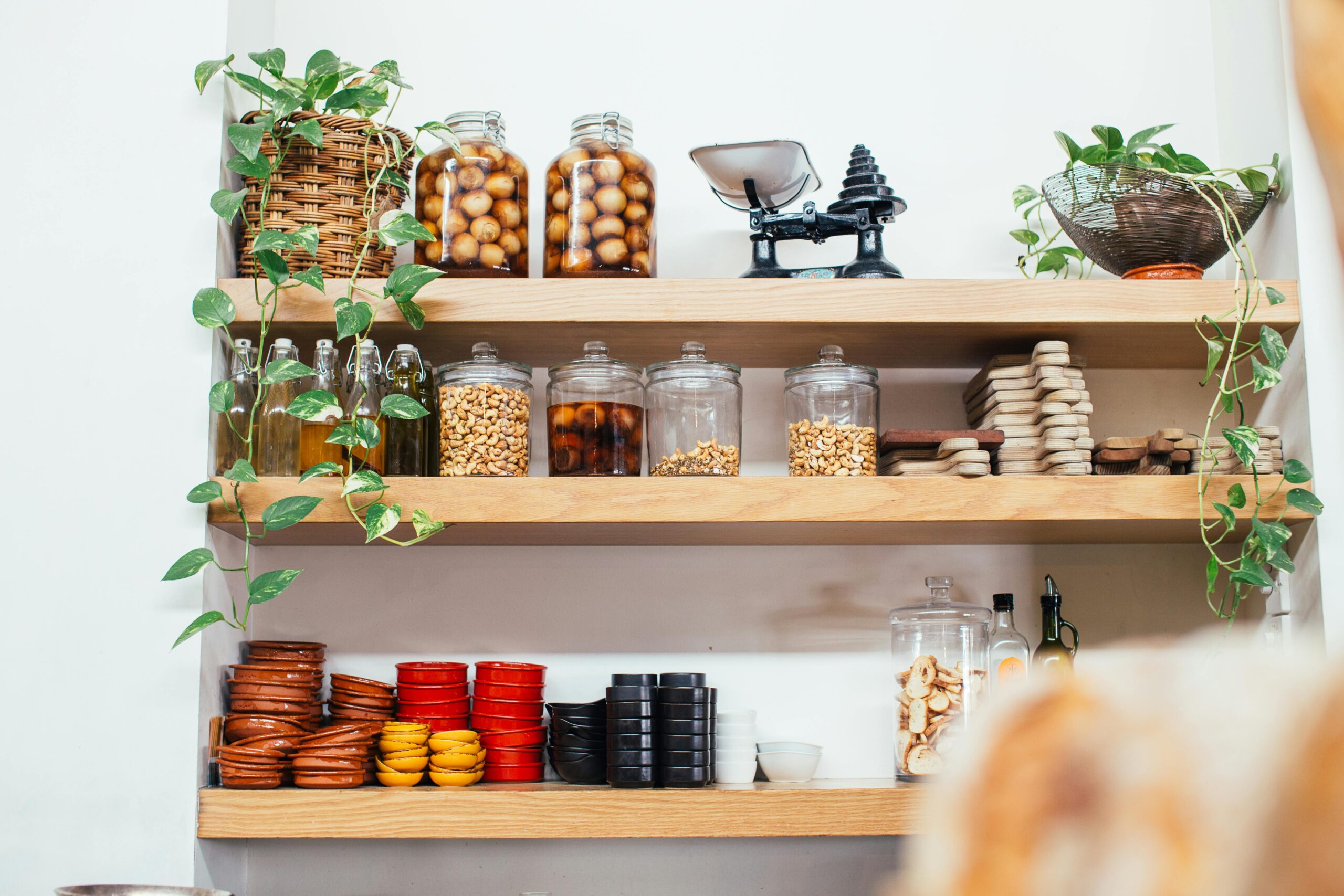

You don’t need a walk-in pantry to have an organized kitchen.
Let’s be honest: scrolling through Pinterest pantry makeovers is satisfying, but also slightly depressing. Those walk-in pantries with color-coded labels and $500 worth of acrylic bins? That’s just not reality for most of us renting small apartments.
But having a small kitchen doesn’t mean you’re doomed to chaos. In fact, a small pantry needs better organization than a big one, because every inch counts.
The good news? You don’t need a contractor. You just need a strategy. Here is exactly how to transform your cluttered cabinet into a functional pantry for under $50.
Step 1: The “Everything Out” Rule
You can’t organize clutter. The first step is painful but necessary: take every single item out of your pantry. Yes, even that expired can of pumpkin puree from 2021.
Wipe down the shelves (crumbs love hiding in corners) and toss anything expired. Be ruthless. If you haven’t eaten it in a year, you probably never will.

Starting with a clean slate is the only way to build a system that lasts.
Step 2: Utilize the “Dead Space” (The Door)
If you have a small pantry, the back of the door is the most valuable real estate you are ignoring. Most people hang a calendar or nothing at all. Big mistake.
Installing a heavy-duty organizer here can instantly add 5-6 extra shelves of storage space. It’s perfect for spices, jars, foils, and snacks that usually get lost in the back of deep cabinets.

Step 3: Conquer the Deep Corners
Deep shelves are the enemy of organization. Things go to the back to die. The solution isn’t to stack things higher, but to make them spin.
A Lazy Susan (turntable) changes the game. Instead of knocking over three bottles of vinegar to get to the soy sauce, you just spin it. For rectangular shelves (like in a fridge or cabinet), a rectangular turntable is actually more space-efficient than a round one.

Step 4: Zone Your Goods
Don’t just put things back randomly. Create “Zones” based on your daily life:
- The “Breakfast Zone”: Cereal, oats, coffee (Eye level).
- The “Dinner Prep Zone”: Pasta, rice, jarred sauces (Middle shelves).
- The “Snack Zone”: Chips, nuts, bars (Lower shelves or baskets).
- The “Refill Zone”: Extra flour, bulk supplies (Highest shelf).

Grouping similar items creates a visual calm and makes inventory checks easier.
Step 5: Decanting (Do You Really Need To?)
We’ve all seen the aesthetic videos of people pouring cereal into matching plastic containers. But is it necessary?
Verdict: Only do it for things you buy in bulk (flour, rice, sugar) or things that go stale quickly (cereal, crackers). For everything else? Keeping the original box is fine. Don’t create extra work for yourself if it doesn’t solve a functional problem.
Final Thoughts
Organizing a small pantry isn’t about spending a fortune. It’s about seeing the hidden space you already have—like the back of a door or the depth of a shelf—and using the right tool to unlock it.
Start with one small change this weekend, and you’ll be surprised how much bigger your kitchen feels.